Cultural ecology is the branch of anthropology that studies how human societies adapt to their environments, and how those adaptations shape social life, economy and belief. It emerged in the United States in the 1950s, produced some of the most influential fieldwork of the twentieth century and still informs research on climate adaptation, pastoralism and resource management. This article traces the field from its founder to its present-day successors.
Origins: Julian Steward
The American anthropologist Julian Steward (1902–1972) gave the field its name and program. His book Theory of Culture Change: The Methodology of Multilinear Evolution, published in 1955, argued that the way a society makes a living in a particular environment explains many of its other features.
Steward rejected two positions common in his day. Against the nineteenth-century idea that all societies pass through the same stages, he argued for multilinear evolution: societies in similar environments with similar technology tend to develop similar institutions, but there is no single universal path. Against the view that culture floats free of nature, he insisted that subsistence, settlement and work organization are tied to ecological conditions.
The culture core
Steward’s key concept was the culture core: the features most closely linked to subsistence, such as the division of labor, the size and mobility of groups, and property rules for land and water. Other features, such as art or many religious details, he regarded as secondary and more open to historical accident and borrowing.
The Great Basin Shoshone
Steward developed his approach among the Western Shoshone and related peoples of the Great Basin in Nevada and Utah in the 1930s. In this dry land, food was scattered and unpredictable. Pine nut harvests failed in some years and were abundant in others, and game was sparse. Steward showed that the Shoshone lived most of the year in small family groups that moved to wherever food was available, gathering in larger camps only for pine nut harvests and communal rabbit or antelope drives. Leadership was temporary and tied to these events. Their social organization, in his analysis, was a direct answer to their environment.
Classic studies
Roy Rappaport: Pigs for the Ancestors
Roy Rappaport’s Pigs for the Ancestors (1968) studied the Tsembaga, a Maring-speaking group in the highlands of Papua New Guinea. The Tsembaga raised pigs and gardened, and their political life moved in cycles of warfare and peace. Rappaport argued that a ritual cycle culminating in the kaiko, a year-long festival with large-scale pig slaughter, regulated the relationship between people, pigs and gardens. When pig herds grew too large and began to damage gardens and burden women’s labor, the ritual was triggered, pigs were killed and distributed, alliances were renewed and a new cycle of warfare could begin. The book was among the first to treat ritual as part of an ecosystem, using measurements of energy and land use.
Marvin Harris: cultural materialism
Marvin Harris developed a broader theory he called cultural materialism. It holds that the material conditions of production and reproduction explain much of social structure and ideology. His best-known analyses concerned the sacred cow in India, which he interpreted as a rational protection of animals that provide traction, milk and dung, and food taboos such as the avoidance of pork in the Middle East.
Robert Netting: Törbel
Robert Netting studied the Swiss mountain village of Törbel in the canton of Valais. Records going back to the thirteenth century showed that villagers had managed high pastures and forests as common property for centuries, while fields and vineyards were privately owned. Netting’s work, published in Balancing on an Alp (1981), demonstrated that commons need not collapse and influenced Elinor Ostrom’s later research on common-pool resources.
Later schools
From the 1970s onward, critics argued that cultural ecology paid too little attention to power, markets, colonial history and conflict. Several new approaches grew out of that critique:
- Political ecology examines how unequal access to land, water and capital shapes environmental change, for example soil erosion driven by debt and land concentration rather than by overpopulation alone.
- Historical ecology, associated with William Balée, studies landscapes as products of long human history. Much of the Amazon forest, for instance, bears the imprint of centuries of Indigenous management.
- Human behavioral ecology applies evolutionary theory to decisions about foraging, reproduction and sharing.
- Ethnoecology documents how local people classify and understand plants, animals and soils.
Today these approaches are often grouped under the broader label of environmental anthropology.
How cultural ecologists work
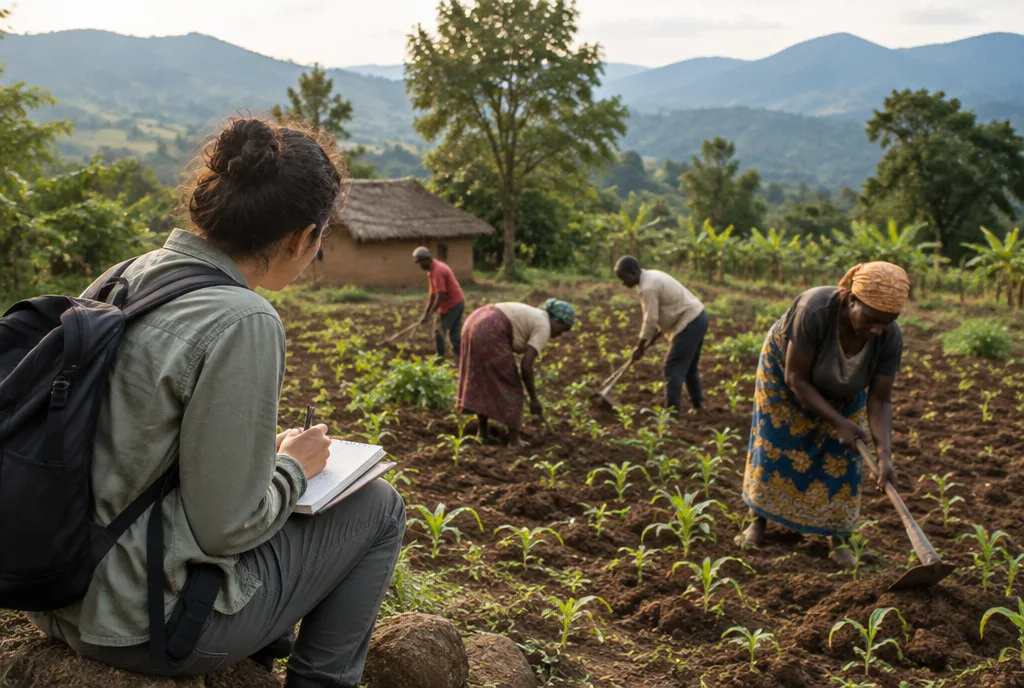
Cultural ecology relies on long-term fieldwork combined with quantitative data. Typical methods include:
- time allocation studies that record how people spend their day,
- measurement of food production, diet and energy expenditure,
- mapping of fields, pastures and settlement patterns,
- household surveys on land, livestock and income,
- interviews on local knowledge, rules and rituals,
- historical sources and, increasingly, satellite imagery.
The combination is what distinguishes the field. A purely ecological study would miss the rules and meanings that guide behavior; a purely cultural study would miss the material constraints within which people live.
Relevance today
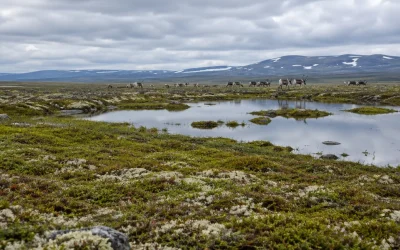
The questions cultural ecology raised are more urgent than when Steward formulated them. In the Arctic, Inuit communities in Canada, Greenland and Alaska face thinning sea ice that affects hunting routes, food security and the transmission of knowledge between generations. Anthropologists work with these communities to document changes and to combine traditional knowledge with scientific monitoring.
In the Sahel, pastoralists such as the Fulani move herds between wet-season and dry-season pastures. Cultural ecologists have shown that mobility is an efficient response to variable rainfall, not a sign of backwardness, and that policies forcing herders to settle often increase conflict and degrade land. Similar insights shape debates about fisheries, forests and water rights around the world.
In farming regions, cultural ecologists study how smallholders adjust crop choices, planting dates and labor migration to more erratic rainfall. Their findings feed into adaptation programs run by governments and development agencies, which work better when they build on existing local practices instead of replacing them.
The central lesson of the field remains simple: environmental problems are always also social problems, and solutions have to fit the ways people actually live.
Frequently Asked Questions
Who founded cultural ecology?
Julian Steward, whose book Theory of Culture Change (1955) set out its concepts and methods.
What is the culture core?
Steward’s term for the features of a culture most closely tied to subsistence, such as group size, division of labor and property rules.
What did Roy Rappaport show in Pigs for the Ancestors?
That a ritual cycle among the Tsembaga Maring of New Guinea helped regulate pig herds, garden land and warfare, treating ritual as part of an ecological system.
How does cultural ecology differ from political ecology?
Cultural ecology focuses on adaptation to the environment; political ecology adds power, markets and inequality as causes of environmental change.