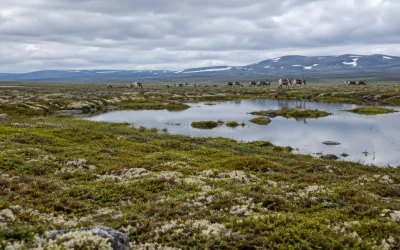

In AP Human Geography, sense of place describes the meanings, feelings, symbols, and values that people connect to a particular location. Beyond its map position, a place can become part of a person’s identity and worldview. One neighborhood café can feel indispensable to its regulars while the same building means little to a visitor, and a city such as Jerusalem can carry profound religious meaning for several communities at once.
How sense of place explains identity in AP Human Geography
At its core, the sense of place definition begins with a relationship. It is the dynamic collection of meanings, beliefs, symbols, values, and feelings that individuals and groups associate with a specific place. It also describes people’s interpretive perspectives on their surroundings and their emotional responses to them. Here, “dynamic” matters: a location can gain new meanings as routines, memories, relationships, and cultural stories change.
For AP Human Geography, sense of place is a perceptual region with which people identify strongly enough that it becomes part of their self-understanding and worldview. A perceptual region is not defined only by boundaries or physical measurements. It exists through shared impressions and identifications. Two people on the same street can understand the setting through different experiences, attachments, and cultural histories.
Geographers often separate this idea into two connected dimensions:
- Place attachment is the emotional bond between people and a location. A childhood home may prompt nostalgia because it is linked to formative memories.
- Place meaning is the cognitive and symbolic significance assigned to a location. A local landmark, a sacred site, or a familiar meeting place can carry meanings people can explain, share, and contest.
Together, attachment and meaning explain why geography is more than locating features on Earth’s surface. They show how people live with, interpret, and value their environments.
Place and space are not interchangeable
Space is the basic geographic category: an area or extent on and around Earth’s surface in which people exist. It can be described in physical terms. Place adds a human layer. A useful shorthand is that places are spaces with meaning: experience and identity change how a physical area is understood.
| Concept | What it emphasizes | Useful question |
|---|---|---|
| Space | Physical extent that can be experienced | What area is here? |
| Place | Experience, identity, and meaning connected to an area | What does this area mean to people? |
| Place attachment | Emotional bond | Why do people feel connected here? |
| Place meaning | Cognitive and symbolic interpretation | What stories, values, or symbols does it hold? |
In geographic knowledge, this distinction also separates two approaches. More objectivist theories are associated with space, while more subjectivist theories are associated with place. In practice, human geographers need both. Although physical qualities matter, they do not by themselves explain what a setting becomes to the people who use it.
Yi-Fu Tuan named the emotional connection between people and places topophilia. He introduced the term in his 1974 book Topophilia: A Study of Environmental Perception, Attitudes, and Values. The idea gives a name to something ordinary but consequential: an environment can be experienced as personally meaningful rather than merely occupied.
How ordinary settings become meaningful places
A landscape does not need to be famous to carry a sense of place. An ordinary site can gain lasting significance through repeated use and social interaction. Consider a neighborhood café. Although its tables and counter are physical features, regular visits, conversations, and familiar routines may turn it into a local meeting point. Its meaning comes from what happens there and from the relationships people associate with it.
As another sense of place example, a childhood home may evoke nostalgia and shape identity because daily life, family memories, and early experiences are tied to it. The memories do not sit in the building itself; people connect them to the building and its surroundings.
Meaning can also be religious and historical and shared across large communities. Jerusalem, a holy city for Judaism, Christianity, and Islam, is one of the strongest examples of sense of place worldwide. Its religious meanings have built up over thousands of years. This does not mean it has one uncontested meaning. Rather, the example shows how a single place can hold deep significance for more than one group.
Sense of place does not depend on sight alone. Agricultural places such as cotton fields can evoke it through smell or touch. That detail prevents a narrow, postcard-style understanding of landscape: people encounter a place through the body, routines, and memory. In a 2022 study by Knaps and colleagues, two case studies with 23 and 244 participants identified features of meaningful places, including forests, heathlands, and agricultural land.
Site and situation explain the setting behind a place
Sense of place focuses on human meaning, but AP Human Geography also asks students to describe the geographic setting. The concepts of site and situation provide a precise way to do that.
- Site means a place’s physical characteristics: landforms, climate, vegetation, water availability, soil quality, minerals, and animal life.
- Situation means a settlement’s relationship to other places, including access to trade routes, transportation connections, and regional function.
A simple test helps. If GPS coordinates and a physical description are enough, the answer concerns site. If the description requires relationships with other places, the answer concerns situation.
Paris illustrates the difference. Its site includes the river island Île de la Cité, which was favorable for defense and for crossing the river. Its situation as a node in the Paris Basin and on the Seine helped it become the capital. Singapore offers a second example: its situation as a port on the Strait of Malacca, one of the world’s most important shipping routes, was crucial to its rise as a global trade center.
Site and situation do not replace sense of place. They make the analysis stronger. First identify the environmental and relational setting; then ask how people attach meanings, memories, and identities to that setting.
Toponyms reveal which stories a landscape carries
A toponym is the name of a place on Earth’s surface. The term comes from the Greek words topos, meaning place or region, and onoma, meaning name. Toponyms are a core AP Human Geography concept because names can preserve environmental descriptions, commemorate people or events, signal religious significance, or record movement from one place to another.
| Toponym type | What it does |
|---|---|
| Descriptive | Describes a physical characteristic, as in Rocky Mountains |
| Associative | Links a place with an association, as in San Francisco Bay |
| Incident | Refers to an event |
| Commemorative | Honors a person or memory |
| Shift | Transfers a name from elsewhere |
| Religious | Expresses sacred associations |
Many toponyms have two parts: a generic element that names the kind of place, such as -ham for a homestead, and a specific element that sets it apart, such as old or new in Oldham and Newham.
Chicago shows how a name can contain an environmental memory: the name derives from Shikaakwa, meaning “stinking onion.” In postcolonial contexts, many countries return to their own place names and replace colonial toponyms. Such changes are not merely administrative. They affect which histories and identities are visible in the cultural landscape.
Placelessness names the loss of local distinction
Edward Relph’s 1976 book Place and Placelessness established a phenomenological approach to place perception. Relph defined placelessness as the weakening or loss of a place’s distinctiveness, so that it loses visual individuality and meaning. In AP Human Geography terms, placelessness is the loss of uniqueness in the cultural landscape until one location looks like the next.
Shopping malls, highways, postwar U.S. suburbs, and edge cities are common examples of placeless landscapes. The point is not that every mall or highway has no meaning to anyone. Marc Augé used “non-place” for transit settings such as airports, highways, and supermarkets, while also arguing that places and non-places overlap and blend in real life. A traveler may experience an airport as anonymous; an employee may connect it with work routines and relationships.
Misconception: placelessness means people feel nothing there
That is too simple. Placelessness concerns diminished distinctiveness and shared local meaning, not a total absence of personal experience. A standardized environment may still matter deeply to a particular person. The concept asks whether the cultural landscape is becoming visually and meaningfully interchangeable, not whether every individual feeling has vanished.
Economic globalization is not automatically anti-place. It can, however, be indifferent to the varied contexts of places when cost efficiency is the priority. “Stripmallification” describes a related pattern of automobile-centered suburban development that makes locations more alike and can leave people feeling that they no longer know their place.
Distance decay changes the connections that sustain place
Distance decay means that interaction between two places decreases as distance increases. Moving people, goods, and information through space takes effort; geographers call this friction of distance. Waldo Tobler expressed the principle in 1970: everything is related to everything else, but near things are more related than distant things.
Shopping provides a clear example. Grocery trips usually have a high distance-decay effect: people tend to travel short distances for them. Furniture trips usually have a lower effect because people are more willing to travel farther. Distance decay can also appear between an urban core and its surrounding hinterland, where interaction changes with distance.
This concept adds motion to sense of place. Local routines, access to meeting points, and connections with nearby communities do not occur in an empty map. They are shaped by the effort required to travel between places.
Use a five-step method to analyze sense of place
- Name the place and its people. Identify the location and the individuals or groups whose perspectives matter.
- Separate attachment from meaning. Look for emotional bonds, then identify the values, symbols, stories, or beliefs attached to the place.
- Describe site and situation. Record physical characteristics, then explain relations to transportation, trade routes, or other places.
- Read the toponyms. Ask what the place name describes, remembers, or makes visible in the cultural landscape.
- Consider distance and distinctiveness. Examine how distance shapes interaction, and ask whether the landscape is becoming more locally distinctive or more interchangeable.
This sequence keeps an answer from becoming either a list of physical facts or a vague account of feelings. It connects environment, culture, identity, and spatial relationships in the way human geography requires.
Frequently Asked Questions
What is a sense of place in geography?
In geography, sense of place is the collection of meanings, beliefs, symbols, values, and feelings people associate with a particular location. It includes emotional responses and interpretive perspectives on an environment.
What does sense of place mean in AP Human Geography?
In AP Human Geography, it is a perceptual region with which people strongly identify, making it part of their identity and worldview. It combines place attachment and place meaning.
What is an example of a sense of place?
A neighborhood café can gain meaning through repeated visits and social interaction. A childhood home can shape identity through memories, while Jerusalem carries major religious meanings for Judaism, Christianity, and Islam.
What is the difference between place and space?
Space is physical extent on Earth’s surface. Place is space that has acquired meaning through people’s experiences, identities, and interpretations.
What is placelessness?
Placelessness is the weakening or loss of a place’s distinctiveness, visual individuality, and meaning. Shopping malls, highways, postwar suburbs, and edge cities are common examples of landscapes associated with it.