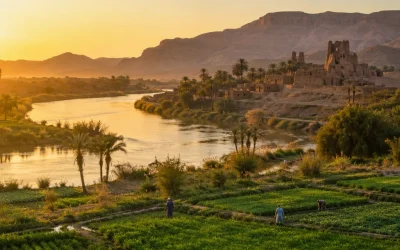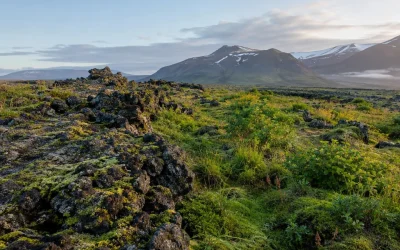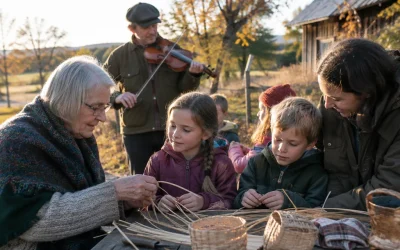
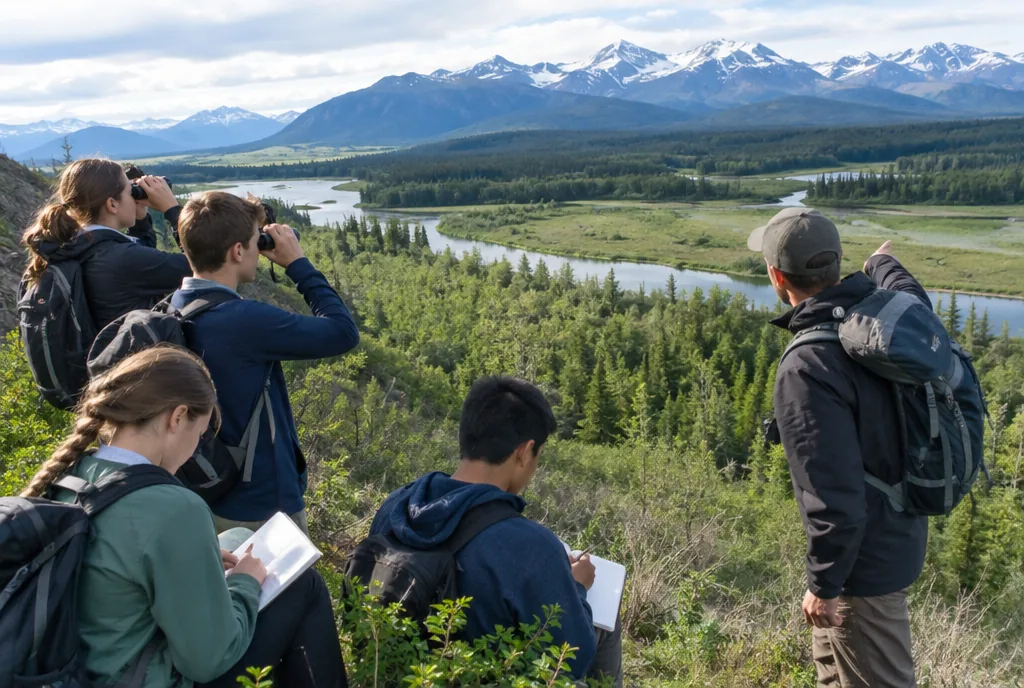
Ecology is the scientific study of where organisms live, how many occur there, and the interactions that determine those patterns. Put simply, it asks who lives where, how many there are, and why. That ecology definition reaches from a single organism responding to temperature or water to the biosphere, the sum of every ecosystem on Earth. It also includes people: human choices, technologies, and social systems can shape environmental relationships as surely as other living and nonliving factors do.
What ecology means—and what it does not
Ecology is a branch of biology concerned with the distribution, abundance, and biomass of organisms in the context of their environment. A modern definition also emphasizes the interactions that determine distribution and abundance, including interactions among organisms and with the physical world. Energy and matter count here as well: ecologists study the processes that connect living things to their surroundings and to flows of energy and materials.
The name has a useful clue. German zoologist Ernst Haeckel coined Oecologie in 1866, drawing on the Greek oikos, meaning house, home, or dwelling place, and logos, meaning study. Ecology can therefore be understood as the study of nature’s household. “Ecology” and “economy” share the same root: one examines the household of nature, while the other concerns the management of a household.
Ecology is not another word for environmental activism. It is a scientific discipline that describes how nature works. Its findings can inform conservation, public policy, agriculture, and decisions about climate change, but the discipline itself begins with evidence-based questions about organisms and environments. Rachel Carson’s Silent Spring, published in 1962, helped bring ecological principles to a broad public and is regarded as a catalyst for the modern environmental movement. That public impact does not change the underlying task of ecology: explaining relationships and patterns in the living world.
Earlier thinkers had already connected people and environments to ecological ideas. In the 1890s, Ellen Richards included humans and the idea of harmony in her ecological definition. Her view anticipated a key lesson of the field: humans are not outside the environment looking in. They are among the organisms whose actions and conditions ecology can examine.
Levels of organization turn a big question into clear scales
Ecology handles enormous complexity by working across levels of organization. Each level keeps the central question intact—who lives where, how many, and why—while changing the unit being studied. An ecologist can ask how one organism copes with its surroundings, how a population changes, how species interact in a community, or how energy moves through an ecosystem.
| Ecological level | What it includes | What an ecologist examines |
|---|---|---|
| Organism | One individual living thing | Its interaction with its environment |
| Population | Individuals of the same species in one area | Density, movement, and change through time |
| Guild | Species that use similar resources | How similar resource use connects species |
| Community | Interacting populations of different species in one place | Relationships among species |
| Ecosystem | Living and nonliving components of an area | Energy flow, nutrient cycling, and interactions |
| Biome | A large ecological region | Broad patterns linked to environment |
| Biosphere | All ecosystems on Earth | The total zone where life occurs |
At the organismal level, the focus is an individual and its direct relationship with its environment. A population is all individuals of the same species living in the same area, mating, and moving through the same habitat and niche. A community brings together several populations of different species that occupy a shared geographic space and interact. Those distinctions prevent a common error: treating “species,” “population,” and “community” as interchangeable terms.
An ecosystem adds the nonliving setting to the living community. Soil chemistry and moisture belong in the picture alongside plants, animals, fungi, and microbes. English ecologist Arthur Tansley introduced the term “ecosystem” in 1935 to describe organisms and their physical environment as an integrated system. His formulation gave the physical environment—including soil chemistry and soil moisture—standing alongside climate and living organisms.
At the broadest level, the biosphere is the total of Earth’s ecosystems: every place where life occurs. The levels do not compete with one another. They are different lenses. A population pattern may help explain a community relationship; an ecosystem process may help explain why a population is abundant in one place and rare in another.
The environment includes living and nonliving forces
In ecology, the environment is more than scenery. It consists of biotic factors, which are living organisms, and abiotic factors, which are nonliving components. Other members of an organism’s own species and individuals of other species are biotic factors. Sunlight, water, temperature, and nutrients are abiotic factors. Both sets of influences can affect where an organism can survive and reproduce.
Abiotic conditions can be highly specific. Temperature, salinity, depth, dissolved oxygen, and chemical nutrients all matter in particular settings. Carbon, nitrogen, phosphorus, sulfur, and iron are among the nutrients ecological studies may consider. This is why ecology cannot be reduced to a list of animals and plants. The conditions around them are part of the explanation.
A change in a living component can reorganize a wider system. The reintroduction of wolves to Yellowstone National Park in 1995 is a classic example of a biotic factor: adding a predator changed the ecosystem. The example is valuable because it directs attention away from isolated species and toward relationships. A population is never the whole story when its food, competitors, predators, habitat, and physical conditions are also changing.
That perspective applies beyond places commonly called wilderness. Ecology examines relationships between organisms and their physical environment, not only remote landscapes. A built environment, a social setting, and a natural setting can all be relevant when the organisms being studied are people.
Four core branches answer different ecology questions
When people ask about four types of ecology, they usually mean four major branches organized by biological level: organismal ecology, population ecology, community ecology, and ecosystem ecology. The branches overlap, but each places a different question at the center.
- Organismal ecology studies how individual organisms respond to their environment through physiological, morphological, and behavioral adaptations.
- Population ecology studies the dynamics of populations, including birth rate, death rate, immigration, emigration, and density.
- Community ecology studies interactions among two or more species, including predation, competition, and mutualism.
- Ecosystem ecology includes living and nonliving components and focuses on energy flows and nutrient cycles.
Population ecology is especially useful for showing how a focused question becomes quantitative. Its models include exponential growth, expressed as dN/dt = rN, and logistic growth, expressed as dN/dt = rN(1-N/K). In the logistic model, K is carrying capacity: the maximum population size a habitat can support over the long term. Life tables and Leslie matrix models are also used to model population growth and age structure.
Ecosystem ecology changes the emphasis. Rather than concentrating primarily on the distribution and abundance of organisms, it studies material and energy flows. Raymond Lindeman’s 1942 work described ecosystems in terms of energy transfer. His 10 percent rule states that only about 10 percent of energy at one trophic level is transferred to the next; the remainder is used in metabolism or released as heat.
The arithmetic makes the constraint visible. An ecosystem with 1,000 kilocalories at the producer level can pass about 100 kilocalories to primary consumers, about 10 to the next level, and about 1 to the third. Ecosystems commonly have four to five trophic levels, limited by energy loss. Net primary production can be expressed as gross primary production minus the respiration of producers: NPP = GPP – respiration.
Seven types of ecology are best understood as classification lenses
There is no single official list of exactly seven branches called “the seven types of ecology.” The phrase is better answered with seven broad ways the field can be classified. These lenses complement the four core branches rather than replacing them: one describes what ecological level is being studied, while another may describe the organism, place, process, or application being studied.
- Taxonomic group: ecology can focus on humans, animals, plants, insects, or microbes.
- Spatial scale: global ecology considers the whole biosphere; macroecology works across large spatial scales; microecology focuses on microhabitats or microbial ecology.
- Level of organization: organismal, population, community, and ecosystem ecology organize questions by their focal unit.
- Biogeographic space: ecological work can be organized around a geographic region.
- Climate zone: Arctic, polar, tropical, and desert ecology focus on environmental settings shaped by climate.
- Ecological phenomenon: behavioral, chemical, evolutionary, fire, landscape, molecular, paleoecology, and ecotoxicology focus on a particular process or phenomenon.
- Interdisciplinary application: applied ecology brings ecological principles to real problems, including agroecology and conservation biology.
This framework helps explain why the field can seem so large. A scientist might study a population in a desert, examine a behavioral question in an insect, or use conservation biology to apply ecological principles. None of those labels cancels the others. They answer different parts of the question: which organism, at what scale, in what setting, through what process, and for what purpose?
A niche is more than the place an organism lives
An ecological niche is the role and position of a species within an ecosystem, including the biotic and abiotic conditions it needs to survive and reproduce. Habitat tells part of the story, but niche reaches further. It includes the conditions an organism requires and the way it fits into relationships with other organisms and the physical environment.
The idea developed in several stages. Joseph Grinnell, writing in 1917, defined a niche through the habitat area a species occupies. In 1927, Charles Elton expanded the concept to include a species’ functional role in a food web. G. Evelyn Hutchinson formalized the niche in 1957 as an n-dimensional hypervolume. In that model, each environmental factor—such as temperature, pH, or food size—forms one dimension of the space of conditions relevant to a species.
Hutchinson also distinguished between a fundamental niche and a realized niche. The fundamental niche is the full set of conditions a species could theoretically occupy. The realized niche is the set it actually occupies after competitive exclusion. The distinction is a reminder that an organism’s possibilities and its observed distribution are not always the same.
So the concise answer to “what is a niche in ecology?” is not “a home.” A niche includes a place, but it also includes conditions, resources, interactions, and the position a species occupies in an ecosystem.
Cultural ecology explains how people adapt through culture
Human ecology studies relationships between people and their natural, social, and built environments. Because the subject crosses boundaries, it overlaps with sociology, anthropology, geography, environmental science, and urban planning. Its central premise is straightforward: people are ecological participants, while their social systems and constructed surroundings also shape ecological relationships.
Cultural ecology is a branch of anthropology that examines interactions between human societies and their physical environment. American anthropologist Julian Steward established the term and published Theory of Culture Change: The Methodology of Multilinear Evolution in 1955. His core argument was that social systems arise from patterns of resource use, and those patterns are shaped by a people’s technological adaptation to their environment.
Steward’s “multilinear evolution” rejected the idea that all societies follow one path. Different physical and historical conditions can produce different social forms, even where cross-cultural similarities exist. This makes cultural ecology especially useful for asking how people respond to environmental constraints without assuming that one response is universal or inevitable.
In Irrigation Civilizations, also published in 1955, Steward connected irrigation in arid climates to collective labor and central authority. The work argued that the coordination needed for irrigation could produce stronger social stratification and eventually contribute to state formation. The example shows what makes cultural ecology distinct from classical ecology: human adaptation happens chiefly through cultural innovations, including technology and social organization, rather than through biological evolution alone.
Climate change and biodiversity make ecological patterns urgent
Climate change is an ecological question because changes in physical conditions alter the distribution and abundance of organisms. The IPCC’s 2018 special report stated that human activities had caused about 1.0°C of global warming above the preindustrial level, with a range of 0.8°C to 1.2°C. If warming continued at the then-current rate, the report projected that global warming would likely reach 1.5°C between 2030 and 2052.
Warming is not evenly distributed. It is strongest over continents and is especially pronounced in the Arctic during the cold season and in the mid-latitudes during the warm season. A 0.5°C temperature increase over the preceding 50 years had already contributed to shifts in the distribution of plant and animal species, lower crop yields, and more frequent wildfires. Limiting warming to 1.5°C rather than 2°C would substantially reduce projected increases in ocean temperature, ocean acidification, and ocean oxygen loss.
Biodiversity gives those patterns a vast scale. Scientists have estimated about 8.74 million eukaryotic species on Earth: about 6.5 million on land and 2.2 million in the sea. Only about 1.3 million have been described and cataloged. The estimate suggests that 86 percent of land species and 91 percent of marine species still await discovery, even though about 15,000 new species are scientifically described each year.
Ecology does not turn those figures into a slogan. It supplies the questions needed to interpret them: Which organisms occur where? Which conditions and interactions support them? What changes when temperature, water, nutrients, predators, or resource use change? In a changing climate, those questions connect local observations to the biosphere.
Common ecology myths can obscure the real science
- Myth: Ecology is the same as activism. Ecology is a biological science. It can inform environmental action, but its basic purpose is to describe and explain natural relationships.
- Myth: The environment means only untouched wilderness. An organism’s environment includes living organisms and nonliving conditions. For humans, natural, social, and built environments can all matter.
- Myth: A niche is just a habitat. Habitat is part of the picture, but a niche also includes the conditions and interactions required for survival and reproduction.
- Myth: The four branches and seven types are competing lists. The four core branches classify ecology by organization level; the seven types are broader classification lenses based on organism, scale, place, climate, phenomenon, or application.
The most useful ecology meaning is therefore relational. Organisms do not merely occupy locations. Their abundance, distribution, and survival emerge from connections with other organisms, physical conditions, energy, matter, and—where people are involved—culture and social organization.
Frequently Asked Questions
What is ecology in simple words?
Ecology is the science of who lives where, how many there are, and why. It studies relationships among organisms and between organisms and their environment.
What are the four types of ecology?
The four main branches are organismal ecology, population ecology, community ecology, and ecosystem ecology. They focus respectively on individuals, groups of one species, interacting species, and living plus nonliving components of a system.
What are the 7 types of ecology?
There is no single official seven-branch list. A useful seven-part classification considers taxonomic group, spatial scale, organization level, biogeographic space, climate zone, ecological phenomenon, and interdisciplinary application.
Which best defines ecology?
Ecology is the scientific study of the distribution and abundance of organisms and the interactions that determine those patterns. It also examines relationships between living things, including humans, and their physical environment.
What is cultural ecology?
Cultural ecology is an anthropological field that studies how societies interact with and adapt to their physical environment through cultural innovations such as technology and social organization.
What is a niche in ecology?
A niche is a species’ role and position in an ecosystem, including the living and nonliving conditions it needs for survival and reproduction. It is broader than a habitat because it includes interactions and requirements, not just location.