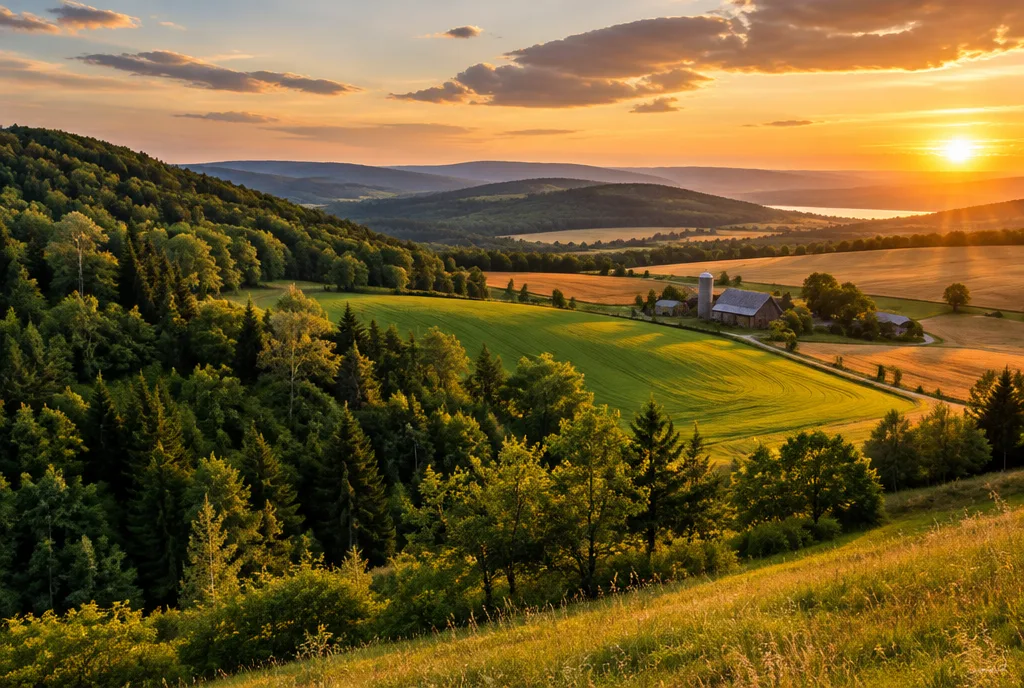
Along the coast of Kerala and in the Western Ghats, patches of old forest survive between rice paddies, coconut gardens and rubber plantations. Many of them are kavu, sacred groves dedicated to a deity, often a serpent god or a form of the goddess, and protected by the belief that cutting a tree there brings misfortune. Estimates for Kerala range from several hundred to more than a thousand groves; across India there are many thousands. They are a textbook case of cultural ecology, in which a religious norm does the work of a conservation law.
What a kavu is
A kavu is a piece of land left to grow wild around a shrine. It may be attached to a family house, a temple or a village community. The deity worshipped there varies:
- Sarpakavu: groves dedicated to serpent deities (nagas), usually with stone images of snakes under the trees. Many old family homes in Kerala once had one.
- Bhagavathi kavu: groves of the mother goddess in her many local forms.
- Groves of Ayyappa, Shasta and local guardian spirits, often at the edge of villages or on hilltops.
Rules differ from grove to grove but typically forbid felling trees, collecting firewood or hunting, and sometimes forbid entering except during festivals. Fallen wood and leaves are left to decompose.
Theyyam
In northern Kerala, particularly in the Kannur and Kasaragod districts, many kavus are the setting for theyyam, a ritual performance in which dancers in elaborate costumes and face paint become the embodiment of deities for the night. Theyyam season runs roughly from October to May. The performances link the groves to the social life of the community, including castes that traditionally performed the rituals.
What lives in a grove
Botanists have recorded rare and endemic plants in Kerala’s sacred groves that have disappeared from the surrounding landscape, including medicinal plants, climbers and old-growth trees of the lowland evergreen forest that once covered much of the coast. Groves also shelter birds, bats, reptiles, amphibians and insects, and in a landscape of plantations and settlements they act as stepping stones for species moving between larger forests.
Many groves protect ponds, springs and wetlands. Villagers value them for water in the dry months before the monsoon, and the dense vegetation helps recharge groundwater.
Notable groves
Some groves have become well known:
- Iringole Kavu near Perumbavoor in Ernakulam district is one of the largest in Kerala, a dense forest of several hectares around a temple of the goddess, visited by pilgrims and naturalists alike.
- Mannarasala near Haripad in Alappuzha district is a famous serpent temple set in a grove, where thousands of snake images line the paths. The temple is traditionally led by a priestess.
Most kavus, however, are small, only a few trees or a fraction of a hectare, and known mainly to the families and villages that tend them.
How researchers study the groves
Surveys of sacred groves typically combine a census of trees and plants in sample plots, bird and butterfly counts, measurements of canopy cover and soil moisture, and interviews with owners and priests about rules, festivals and the history of the grove. Comparing groves with nearby plantations and secondary forest shows how much diversity the taboos have kept. Satellite images and old land records help reconstruct how many groves have been lost and when.
Sacred groves elsewhere in India
Kerala’s kavus are part of a much wider pattern:
- Karnataka: devarakadu (forests of the gods) and kan forests in the Western Ghats, some covering large areas.
- Maharashtra: devrai groves in the Sahyadri hills.
- Rajasthan: orans, community-protected groves and pastures in the desert, often dedicated to local deities, which also serve as grazing reserves and water catchments.
- Meghalaya: the sacred forests of the Khasi, such as the Mawphlang sacred forest near Shillong, where nothing may be removed from the forest.
- Tamil Nadu: kovil kaadu, temple forests often guarded by the village deity Ayyanar and his terracotta horses.
Why the groves are shrinking
Studies since the 1990s report steady loss in Kerala. The causes are largely social:
- Division of land: family property is divided among heirs and sold, and new owners may not respect the old rules.
- Temple renovation: shrines are rebuilt in concrete, and trees around them are cleared to make space for buildings, halls and parking.
- Changing beliefs: younger generations, often working in cities or abroad, no longer share the taboos, and some families ritually transfer the deity to a temple and clear the grove.
- Land prices: Kerala is densely populated and land is valuable, which increases pressure to use every plot.
Where a grove is managed by a single family rather than a community, it tends to vanish faster.
Protection efforts
The Kerala Forest Department, the Kerala State Biodiversity Board and research institutions have run programs to document groves, map their species and support their owners, including grants for fencing and maintenance. The 2002 amendment to India’s Wildlife Protection Act introduced community reserves, a category that allows privately or community-owned land to be protected with the consent of its owners, and some sacred groves have been recognized this way. Local biodiversity management committees, set up under the Biological Diversity Act of 2002, record groves in people’s biodiversity registers.
Non-governmental organizations work with temple committees and families to replant native species and to present groves as a source of local pride rather than an obstacle to development.
What South India teaches
The groves show both the strength and the limit of belief as a conservation tool. Strength: a rule that nobody enforces in court held for centuries. Limit: it holds only as long as the culture that made it. Cultural ecologists therefore argue for linking traditional rules to modern ones, recognizing groves in land records, paying communities for protection, and teaching the ecology behind the taboo.
Similar cases exist around the world: church forests in Ethiopia, sacred groves in Ghana and elsewhere in West Africa, shrine forests in Japan and sacred sites among Indigenous peoples in the Americas. In each, a spiritual relationship with a place has protected ecosystems that surrounding land use would otherwise have erased.
This site is an independent reference on cultural ecology and anthropology.
Frequently Asked Questions
What is a kavu?
A sacred grove in Kerala, a patch of forest left uncut around a shrine dedicated to a deity such as a serpent god or the goddess Bhagavathi.
Why are sacred groves important for biodiversity?
They preserve native trees, rare and medicinal plants, animals and water sources that have disappeared from the surrounding farmland.
Why are sacred groves disappearing?
Mainly because of land division and sale, concrete temple construction, rising land prices and fading belief in the old taboos.
Are sacred groves legally protected in India?
Some are, for example as community reserves under the 2002 amendment to the Wildlife Protection Act, but most rely on tradition and the goodwill of their owners.